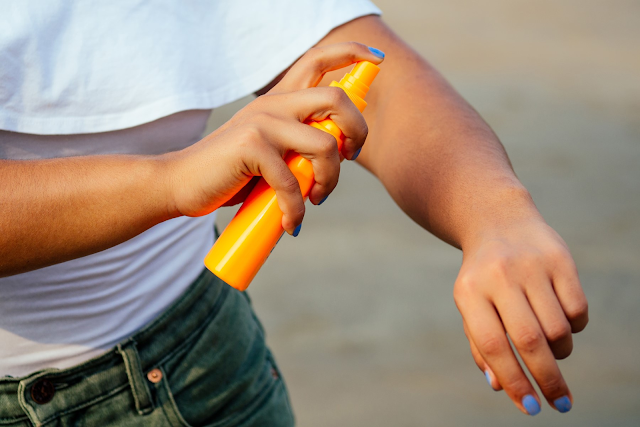
Growing demand from UK cancer charities to scrap tax on sunscreen

Growing demand from UK cancer charities to scrap tax on sunscreen

 A number of cancer charities in the UK have been demanding the scrapping of Value Added Tax, or VAT, on sunscreen to make it more affordable. The product comes under the "cosmetic" category and carries a 20% tax, adding around £1.50 to the cost of a single bottle.

The 20% standard VAT rate applies to most goods and services. Charities want high-factor protective creams to be rid of the tax, citing the cost-of-living crisis which has seen scores of Brits struggling to make ends meet.

Sun damage is majorly responsible for skin cancers. Although there are several types of skin cancer, melanoma is the most dangerous of them all as well as the most common type among youngsters in the country. If left untreated, the cancer can swiftly spread to other body parts.

Dr. Louise Soanes, Chief Nurse, Teenage Cancer Trust, said only a handful of people realize that getting painful sunburn just once every couple of years can triple their risk of skin cancer - adding "sun cream shouldn't be a luxury that only some can afford."

Cruise ship dancer Kass Barker was diagnosed with melanoma in October 2020. She wants to warn others about how serious the condition can be. "Melanoma can kill," she said, adding skin cancer is usually not seen as a serious threat when compared with other types.

Scottish National Party MP Amy Callaghan, who was diagnosed with the same condition at the age of 19, is running a campaign and petition calling on the government to "make sunscreen more affordable, by removing VAT."

Around 50% of 2,000 people in the UK aged 16 and over surveyed by the charity Melanoma Focus thought sunscreen was too expensive.

While one in 10 said they didn't use the product owing to the cost, others cited different reasons, including a desire to tan, a belief their skin won't burn, and a feeling that sunscreen is unpleasant to apply or wear.

Staying Safe In The Sun

1. Spend time in the shade whenever possible

2. Wear protective clothing

3. Use SPF 30+ sunscreen with at least four-star UVA protection

4. Wear quality sunglasses

5. Choose a wide-brimmed hat


Comments

Popular posts from this blog

Syria Condemns Israeli Incursion into Beit Jinn, Holds Israel Responsible for Escalation

 Syria strongly condemned an Israeli military incursion into the town of Beit Jinn in rural Damascus, denouncing the assault on civilians and their property, which resulted in casualties and widespread panic. In an official statement, the Syrian Ministry of Foreign Affairs described the incursion as a war crime, stating it followed Israel’s failed attempt to target the town. The ministry held Israeli authorities fully responsible for the aggression and its consequences. Syria called on the UN Security Council, the United Nations, and the Arab League to take urgent action to halt repeated violations. It reaffirmed its commitment to defending its sovereignty and people through all means permitted under international law.

Israel issues latest forced evacuation order in areas in Khan Younis

  The Israeli army’s Arabic-language spokesperson, Avichay Adraee, has issued the latest forced evacuation order for civilians living in nine areas in Khan Younis, southern Gaza. Adraee said that the army was expanding its operation and “intensifying sudden and concentrated firepower”. The spokesperson called on residents to evacuate westward. So-called Israeli safe zones, including Al-Mawasi in Khan Younis, are routinely attacked despite the army forcing Palestinians to move to those areas.

Bombay High Court Restricts Bursting of Firecrackers in Mumbai During Diwali to These Timings

  The festival of Diwali, often referred to as the "Festival of Lights," is celebrated with great enthusiasm and fervor across India. While the tradition of lighting lamps and bursting firecrackers has been an integral part of the festivities, concerns over air pollution and its adverse effects on public health have prompted authorities to regulate the use of fireworks. The Bombay High Court , in a recent decision, has imposed restrictions on the bursting of firecrackers in Mumbai during Diwali, specifying designated timings to minimize the environmental impact. In an effort to strike a balance between celebrating the festival and safeguarding the environment, the Bombay High Court issued a directive that restricts the use of firecrackers to specific time slots. The court's decision is a response to the rising concerns about air quality and noise pollution during Diwali, which often reaches hazardous levels in several Indian cities. These timings aim to strike a balance b...